
At a Glance
- The AI visibility hierarchy of needs has three layers: audience, ecosystem and structure.
- Content teams should fix those layers in that order, because structure cannot compensate for weak relevance, thin insights or low authority.
- The content most likely to be surfaced by AI is aligned to real audience questions, offers original value and is reinforced across multiple trusted channels.
- Strong SEO, GEO and AIO performance depends less on formatting tricks and more on publishing content that is useful, credible and easy to extract.
Let’s just say it: a lot of “AI optimization” advice is recycled SEO hygiene with a fresh label on it.
Add schema, tighten headers, use shorter paragraphs, and create FAQ blocks. Sure, do those things. But let’s not pretend they’re the reason a brand becomes visible, trusted or cited.
The uncomfortable truth is this: most content teams do not have a formatting problem. They have a relevance problem, a value problem or an authority problem. Structure is just where those deeper problems go to hide.
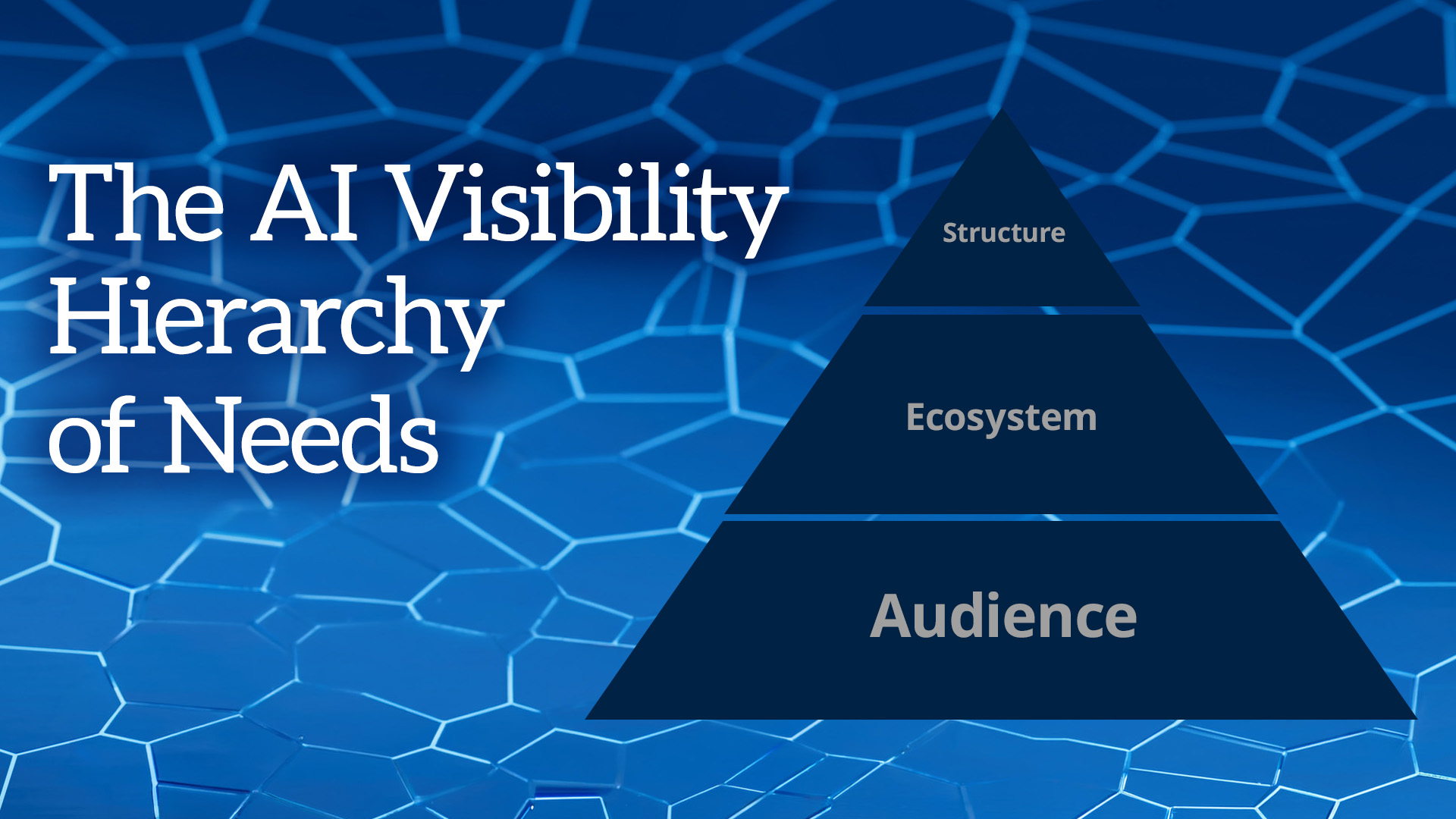
What is the AI visibility hierarchy of needs?
Originally proposed by Abraham Maslow, Maslow’s hierarchy of needs is a psychological theory based on a simple premise that foundational needs must be addressed before anything more advanced can really matter.
The AI visibility hierarchy of needs functions in a similar way: content does not become visible to AI just because it is neatly formatted, but because it earns relevance, authority and trust in the right order.
It forces a smarter conversation. Not “how do we make this easier for machines to read?” but “why would a machine choose to surface this in the first place?”
Just like with Maslow’s original hierarchy, the order in which you approach building an AI-friendly content strategy matters:
- First, you have to start by answering real audience questions
- Then reinforce that authority across a content ecosystem
- Only then should you focus on a structure that makes it easy for AI to extract insights
If your strategy starts with number three, you’re polishing the silverware while the kitchen is on fire.
Stop treating AI visibility like a formatting exercise
A weird thing has happened over the last year or two. Traffic gets shakier, leadership starts asking about AI, and suddenly every team is hunting for technical shortcuts.
That reaction makes sense. Technical fixes feel controllable, they’re easy to assign, and they look productive in a project tracker.
But “easy to assign” is not the same as “worth doing first.”
A generic article with tidy formatting is still generic. A weak point of view in a clean template is still weak. And five thin articles with perfect subheads are still five thin articles.
This is the part people don’t always want to hear: AI systems are not rewarding content just because it is extractable. They reward content that is both extractable and worth extracting.
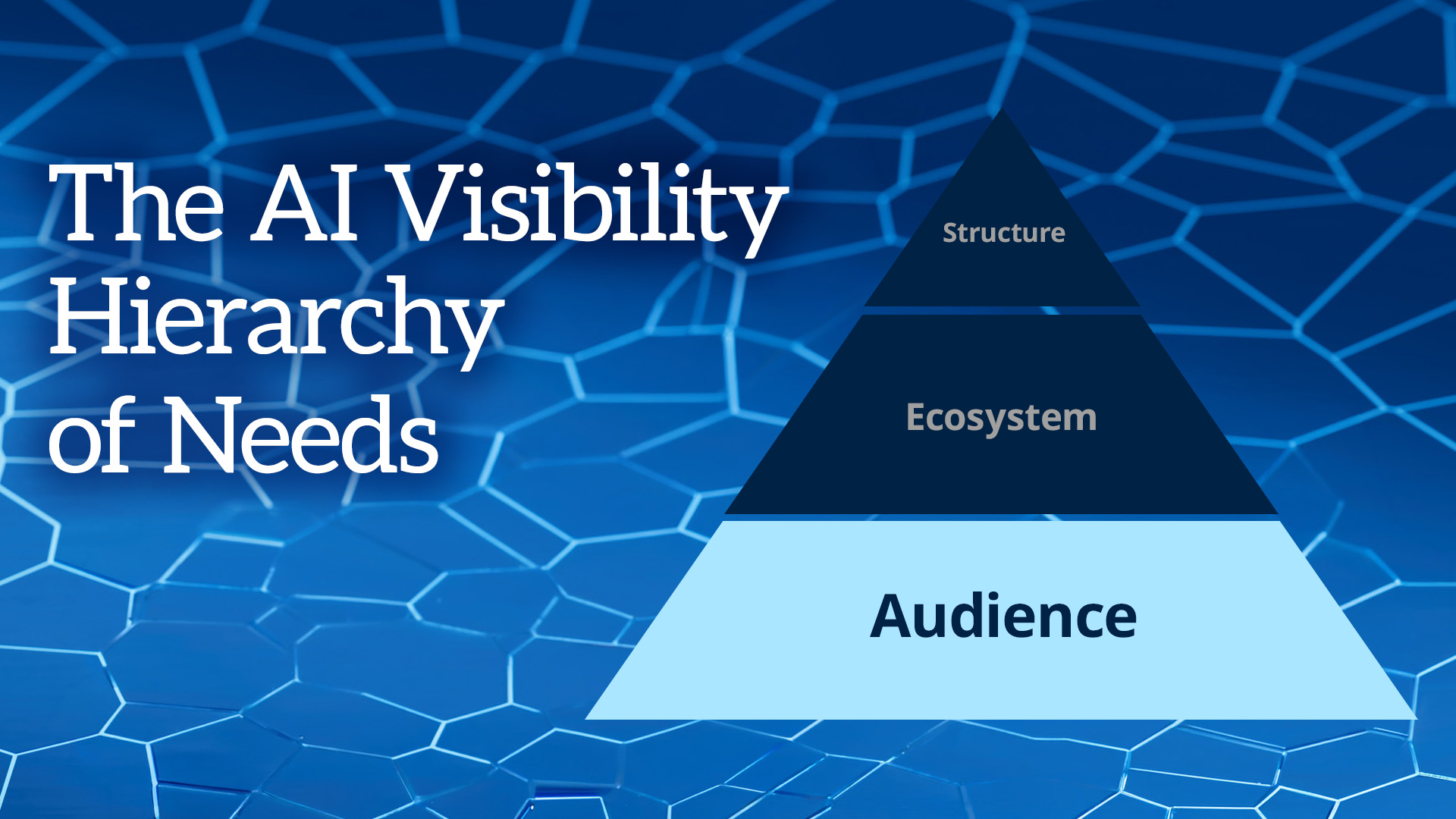
Layer 1: Audience
This is the foundation. It always has been, and AI didn’t change that.
The teams that win are not just picking topics. They understand the pressure behind the question. They know what their audience is worried about, what language they use, what they are comparing, what they are skeptical of and what would make them trust an answer.
Too much content strategy still relies on stale personas and keyword lists dressed up as audience insight. That was already weak before AI, but now it’s a liability.
If your only idea of audience understanding is “marketing manager, B2B, mid-market,” you are not close enough to the real question.
What matters is this:
- What would this person ask in their own words?
- What are they really trying to avoid, prove, fix, or justify?
- Are they looking for a definition, a process, a recommendation or evidence?
- Has the market shifted since you last updated your assumptions?
Good AI-visible content starts with real buyer intelligence. Not the sanitized version from a slide deck, but real human intent.
Because if your content answers the wrong question, no amount of structure or amplification will save it.
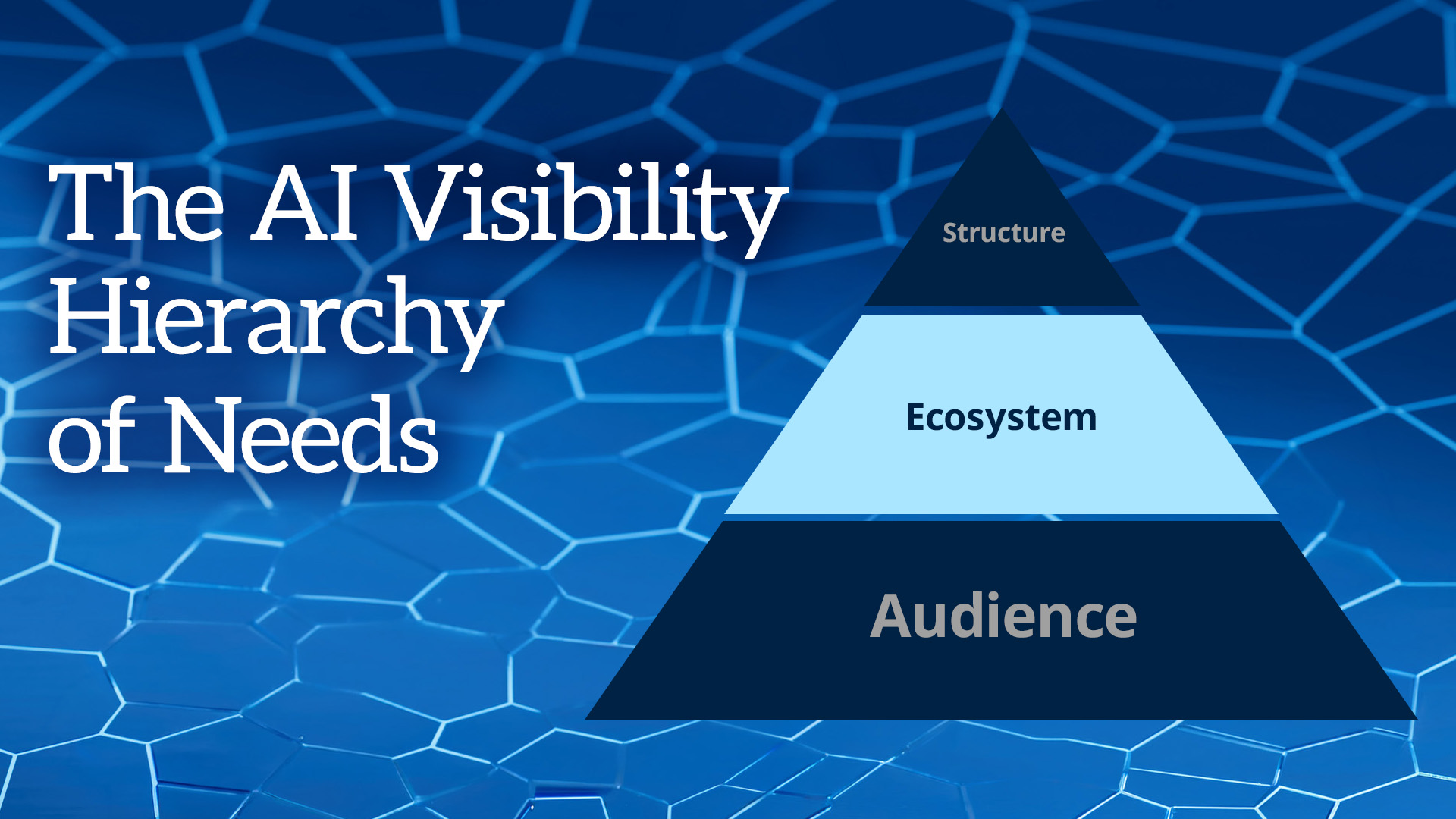
Layer 2: Ecosystem
This central layer is where most content teams underinvest in because it’s messier than publishing another article.
One page rarely builds authority on its own. One strong opinion buried in your blog does not create market visibility. One report with no follow-up is not a strategy. It’s a moment.
Authority gets built through repetition, reinforcement, and consistency across channels. That means your best ideas should not live once.
They should show up as:
- A strong main article
- Supporting posts
- Internal links that connect the story
- Executive commentary
- SME contributions
- Social posts that extend the argument
- Newsletter coverage
- Webinar discussion
- Third-party mentions when possible
It’s imperative that content leaders start thinking like orchestrators.
Because AI doesn’t just ingest pages. It picks up patterns.
If your company has a real point of view on a topic, that point of view should be visible in more than one place. It should be reinforced by more than one person. It should not rely on one URL to carry the entire burden of trust.
The strongest content programs are not a collection of one-off assets. They build topic gravity.
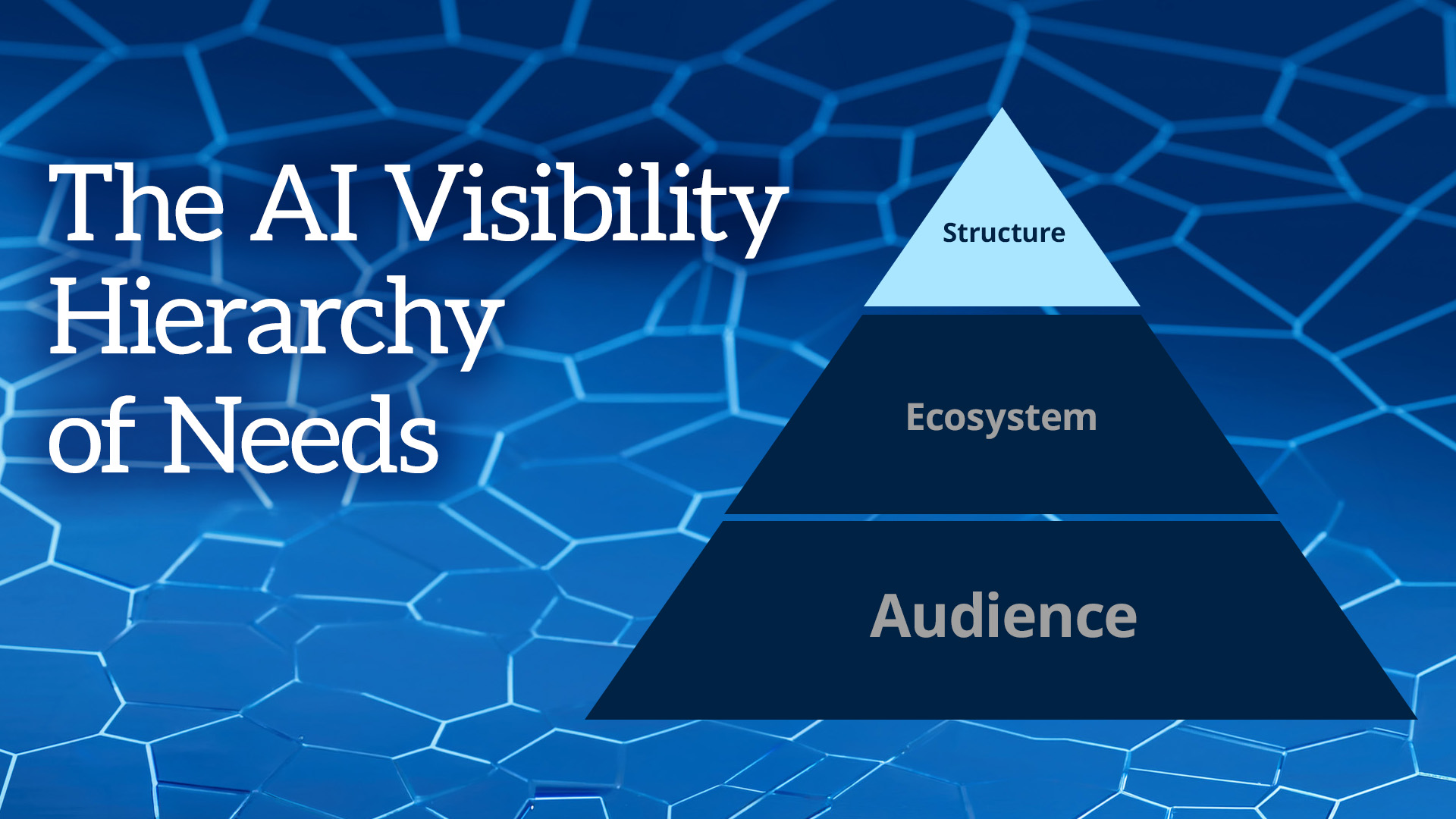
Layer 3: Structure
Now we get to the place where everyone else typically starts.
Yes, structure matters. A lot. Good structure makes content easier to scan, easier to interpret and easier to pull into summaries and answer boxes. It helps both humans and machines get to the point faster.
That includes things like:
- Clear H2s and H3s
- Concise summaries near the top
- Direct answers early in the piece
- Useful bullet points
- Comparison tables
- FAQ sections where they actually help
- Clean page hierarchy
- Obvious internal links
All of that is smart. All of that is worth doing. But let’s keep this in perspective: structure is an amplifier, not a savior. It helps strong content travel farther. It does not magically give weak content credibility.
This is why so much AI optimization advice feels hollow. It focuses on the packaging because packaging is easier to standardize than judgment.
Judgment is harder. Judgment requires knowing your audience, having something real to say and building a system that reinforces authority over time.
A template can’t do that for you.
Want to deep dive into building an AI-friendly content strategy? In The AI Playbook: Building Visibility in an AI-Driven Buyer Journey, Melissa Mattoon, Strategy Director, Studio (Informa TechTarget) explains why AI visibility is tied to deep audience understanding and the ability to provide valuable answers to real audience questions. Watch now on demand.
What content teams should do next
If you lead content, the takeaway here is not “ignore structure.” Instead, the takeaway is really “stop letting structure dominate the conversation.”
Use this order instead:
- Fix audience alignment: Make sure the content your team creates is answering a real, current question your audience is asking.
- Raise the bar on substance: Push for stronger examples, clearer opinions, better evidence and more expertise.
- Build the ecosystem: Support important topics across multiple formats and channels so authority compounds.
- Then optimize structure: Make the content easy to parse, scan, extract and cite.
That order sounds obvious once you say it out loud. Which is exactly why it’s so frustrating that so many teams still get it backwards.
If your team has been publishing thin, repetitive, lightly differentiated content for years, AI isn’t the cause of your visibility problem. It’s the thing revealing it.
Today’s marketers need to give LLMs something worth repeating. Complete the B2B AI Authority Index to determine whether your brand has built the kind of authority that not only holds up in AI responses — but reverberates through every key channel, community and voice that influences your buyers. Take the assessment.
Final thoughts
No matter what your slightly overzealous CEO might tell you, you don’t need an “AI content strategy” built on gimmicks. To increase and optimize your AI visibility, you need a content strategy rooted in audience truth, actual expertise, reinforced authority and clear presentation.
That’s the hierarchy. Get the order right and your content has a much better shot at being found, trusted and cited, whether the audience reaches you through search, AI summaries or the next interface that shows up six months from now.
Remember: A lot of teams are trying to make their content easier for AI to read, but smarter teams are making content that’s harder for AI to ignore.
—
When it comes to building AI visibility, getting the structure right is only part of the job. Studio by Informa TechTarget helps brands build AI optimization strategies that start higher up the stack, with sharper audience insight, stronger content substance and smarter distribution across the channels buyers already trust.
Talk to an expert today to explore how Studio by Informa TechTarget can help you create content that shows up in the moments that matter, earns credibility during buyer research and keeps your brand visible as AI-generated answers reshape how decisions get made.
About the Author

Marketer Resources