
Introduction: What is demand generation?
B2B demand generation has evolved from a simple lead capture mechanism into a sophisticated, strategic process that drives sustainable business growth. In today’s digital-first marketplace, where 80% of tech buyers say online information is sufficient to build vendor shortlists without engaging sales representatives, the traditional approaches to customer acquisition are no longer adequate.
Demand gen is the strategic process of driving interest and engagement in a company’s products or services, with the goal of converting that interest into measurable business outcomes, such as leads, sales and revenue. Unlike traditional marketing approaches that often focus on short-term gains, demand generation emphasizes a holistic, long-term strategy that nurtures relationships with potential customers throughout their entire buying journey.
The foundation of successful demand generation programs lies in understanding that modern B2B buyers have fundamentally changed how they research, evaluate and purchase solutions. They conduct extensive online research, leverage multiple digital touchpoints, and often defer sales interactions until much later in their decision-making process. This shift presents both significant challenges and substantial opportunities for demand generation marketers who must adapt their strategies to meet buyers where they are in their journey.
A well-crafted demand generation strategy aligns marketing and sales teams and ensures that every effort contributes to overarching business objectives. By leveraging data-driven insights, personalized content and targeted outreach, businesses can effectively engage with their audience at the right time and through the right channels, leading to higher conversion rates and stronger customer loyalty.
Lead generation vs. Demand generation
Lead generation focuses specifically on filling the marketing funnel with audiences who have a current need and budget to purchase your product or service. It’s a tactical approach centered on identifying prospects who are ready to engage with Sales in the near term. Lead generation activities typically include form fills, demo requests, content downloads and other actions that indicate immediate purchase intent.
Demand generation is a much broader strategic concept that encompasses the entire buyer’s journey. Rather than focusing solely on immediate leads, demand generation addresses buyer needs at all critical stages of their decision-making process. It’s about creating awareness, building relationships and nurturing prospects from initial problem recognition through to purchase and beyond.
While lead generation only covers efforts to identify prospects with immediate purchasing intent, demand generation takes a holistic approach that includes both lead generation and pipeline acceleration.
The complete formula:
Demand Generation = Lead Generation + Pipeline Acceleration
Pipeline acceleration: The missing piece
Pipeline acceleration represents the often-overlooked component that can dramatically impact results. These efforts focus on:
- Shortening time to close through more effective decision support.
- Improving win rates with targeted content for different buying stages.
- Supporting sales relationships throughout the entire process.
For example, pipeline acceleration might include post-demo surveys that capture feedback prospects won’t share directly with salespeople, competitor-specific nurture streams for deals in final consideration or targeted direct mail campaigns for organizations evaluating proposals.
The best demand generation strategies make progress in pipeline acceleration and lead generation simultaneously. Here’s why this integrated approach is crucial:
| Lead generation benefits | Pipeline acceleration benefits |
| Fills the funnel with qualified prospects | Maximizes conversion from existing opportunities |
| Provides immediate pipeline opportunities | Reduces sales cycle length |
| Delivers short-term revenue impact | Improves overall win rates and deal velocity |
This distinction has significant implications for how marketing programs are structured and evaluated for success. Instead of obsessing over lead volume metrics, focus should shift from lead conversion rates to pipeline contribution. Additionally, marketing’s role must go beyond the handoff to Sales, to maintain engagement throughout the entire buyer’s journey.
Organizations that embrace this broader view of demand generation – one that includes both lead generation and pipeline acceleration – position themselves to drive more predictable, sustainable growth. They create marketing engines that don’t just fill the funnel but actively contribute to closing more deals faster.
Understanding this difference allows GTM teams to build more comprehensive strategies that serve buyers at every stage while maximizing their impact on revenue growth.
Adapting demand gen to evolving buyer behavior
The digital transformation of B2B buying
The rapid pace of digital transformation has fundamentally altered buyer behavior, driving a significant shift towards digitally driven interactions. As organizations continue to embrace new technologies, buyers have become increasingly self-sufficient in their purchasing journeys. This transformation is evident in the way buyers now conduct extensive online research, leveraging a wealth of digital resources to educate themselves long before engaging with sales representatives.
One of the key outcomes of this shift is the rise in self-education among buyers. According to a 2025 Media Consumption Survey, 80% of tech buyers say the information they find online is sufficient to help them build vendor shortlists without needing to engage a sales rep. This highlights the growing importance of having a strong digital presence, as buyers are spending more time with independent sources and relying heavily on expert content to inform their decisions.
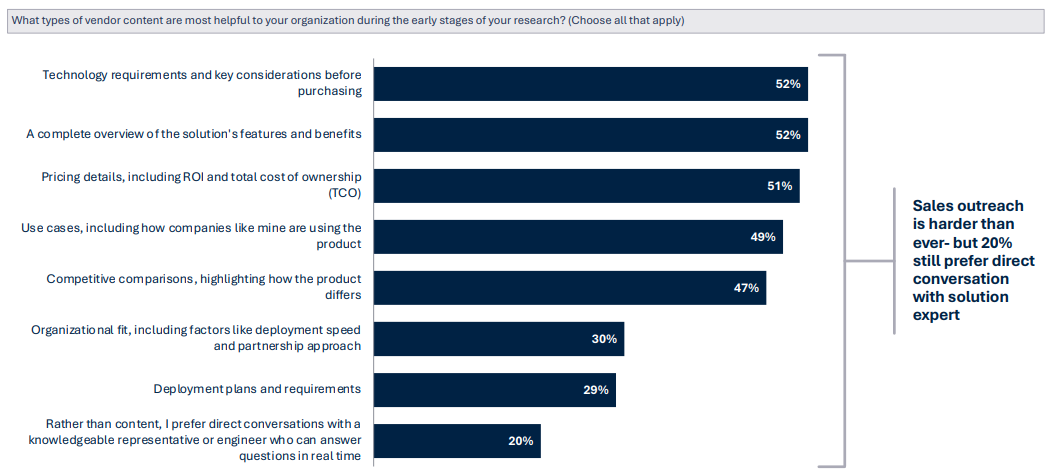
Even in the early stages, buyers need to understand criteria, product features and pricing details
Strategic adjustments for modern demand generation
As buyer behavior evolves, demand generation strategies must adapt to keep pace. The traditional purchasing process of direct sales engagement with an individual is being replaced by buying groups that prioritize digital channels and data-driven insights. The increased autonomy of buyers means that organizations need to be more proactive in reaching out at the right moments and through the right channels.
To align with these digital trends, demand generation teams should focus on creating personalized and timely engagements based on buyer behavior data. The goal is to meet buyers where they are in their journey, providing them with the information they need at the precise moment they need it. This requires leveraging behavioral data to understand buyer intent and crafting messages that resonate with their specific needs and challenges.
Key strategic adjustments include:
- Enhanced digital content strategy: With buyers increasingly relying on digital content, businesses must prioritize the creation of high-quality, educational content that speaks directly to the buyer’s needs. This content should be easily accessible across multiple channels, including websites, social media, and video platforms.
- Data-driven personalization: Understanding and responding to buyer behavior in real-time is crucial. By using intent data, businesses can gain insights into which buyers are actively researching their solutions and tailor their outreach accordingly. This not only improves engagement but also enhances the relevance of the messaging.
- Multichannel engagement: To effectively reach today’s digitally driven buyers, demand generation strategies must incorporate a mix of digital touchpoints. This includes everything from search engine optimization (SEO) and content marketing to social media, and the growing use of video-based channels such as webinars, virtual events, and video. Each channel plays a role in guiding the buyer through their journey, making it essential to have a cohesive, integrated approach.
- Timely interactions: The ability to engage with buyers at the right time is a significant advantage. Leveraging behavioral data allows businesses to identify when a buyer is most likely to be receptive to outreach, enabling more effective and impactful interactions.
The benefits of effective demand generation
Demand generation provides numerous benefits that contribute to sustainable business growth:
- Increased brand awareness: Demand generation efforts focus on creating awareness and visibility of a brand, helping to establish the company as a trusted authority in an industry.
- Improved lead quality: By utilizing targeted marketing campaigns and personalized experiences, demand generation lets businesses attract and capture high-quality leads who are more likely to be converted into customers.
- Greater customer engagement and retention: Demand generation strategies emphasize meaningful interactions with prospects throughout their customer journey, fostering engagement and building long-lasting relationships with the audience. It also focuses on nurturing existing customers, encouraging repeat business, fostering loyalty and reducing churn.
- Enhanced customer trust and credibility: Through consistent and valuable content and offers, demand generation helps to position a company as a reliable and knowledgeable resource, earning the trust and credibility of potential customers.
- Expanded market reach: Effective demand generation techniques let marketing teams reach a wider audience and tap into new markets, opening up opportunities for business growth and expansion.
- Increased conversion rates: By nurturing and educating prospects, demand generation increases the likelihood of converting leads into customers, maximizing conversion rates and improving overall sales performance.
- Data-driven insights: Demand generation relies on data analysis and tracking to measure the success of campaigns, providing valuable insights that can inform future marketing strategies and optimization efforts.
- Sustainable business growth: Demand generation contributes to long-term business growth by creating a consistent pipeline of interested prospects and converting them into loyal customers, ensuring the stability and profitability of an organization.
The six stages of demand generation
In demand generation, the buyer’s journey is segmented into distinct phases – Awareness, Interest, Consideration, Decision, Purchase and Retention. Each of these phases represent a critical point in the buyer’s decision-making process, and the effectiveness of a demand generation strategy hinges on engaging the buyer at every stage.
1. Awareness stage
During the awareness stage, potential buyers are just beginning to recognize a need or problem. At this point, they are seeking broad information to better understand their situation. The goal is to create awareness among the target audience about a brand, products or services. Potential customers are aware they have a problem and are researching solutions through various channels, such as content marketing, social media, search engines and referrals.
Content such as blog posts, educational articles, infographics and introductory videos play a crucial role here, helping to inform and engage prospects by addressing common pain points and raising awareness of possible solutions. The focus is on capturing their attention and introducing them to the company’s value proposition.
2. Interest stage
As buyers move into the interest stage, they start exploring potential solutions more actively. Once prospects are aware of the offerings from a company, the next stage is to pique their curiosity and engage them further. Here, they are looking for content that provides deeper insights into the problem and how various solutions might address it.
This can be achieved through compelling content, thought leadership pieces, educational resources, webinars and interactive experiences. The goal is to showcase the brand’s expertise, build trust and establish credibility, while keeping prospects engaged and eager to find the best fit for their needs.
3. Consideration stage
In the consideration stage, buyers are evaluating specific solutions and comparing different vendors. This is where potential customers actively evaluate a company’s offerings and compare them to alternatives as part of their due diligence. They seek detailed content that helps them weigh the pros and cons of each option.
At this stage, buyers look for more in-depth information, like reviews, case studies and product demonstrations to make informed comparisons and narrowing down their choices. Content should address a customer’s specific pain points and showcases the unique benefits of their products or services to help them make an informed decision.
4. Decision stage
During the decision stage, buyers are close to making a purchase decision and need content that reassures them they are making the right choice. At this point, prospects are actively considering making a purchase. They might request price quotes, engage in sales conversations and participate in product trials or demos.
This is where content such as product demos, customer testimonials and free trials can have a significant impact. These materials help address any last-minute concerns and build confidence in the decision to move forward with a particular vendor. The goal is to nurture their intent and provide the necessary support and information to help them make a confident buying decision.
5. Purchase Stage
In the purchase stage, the focus shifts to facilitating the transaction. This is the stage when prospects take the desired action to become customers. This can involve making a purchase, signing up for a subscription, requesting a consultation or taking another conversion action based on specific business goals.
Buyers need clear and concise information on how to complete their purchase, along with any necessary support to finalize the deal. This could include detailed pricing information, purchase guides, and direct access to sales representatives for any final queries. The focus shifts to providing a smooth and seamless conversion experience, addressing any concerns or obstacles, and ensuring a positive transition from prospect to customer.
6. Retention Stage
The journey does not end at the purchase. The retention stage is about nurturing ongoing relationships with customers to encourage repeat business and loyalty. This part of the customer journey requires ongoing support, delivering exceptional experiences and fostering loyalty through continued communication and value propositions.
Content that provides ongoing value, such as how-to guides, product updates and exclusive webinars, helps ensure that customers continue to see value in their purchase and are more likely to stay engaged with the brand. Loyal customers become great advocates for a brand and often lead to more people being referred into the top of the demand-generation funnel.
Understanding your target audience
Defining your total addressable market (TAM)
The total addressable market (TAM) represents the total revenue opportunity available if a product or service were to achieve 100% market share. For businesses, defining the TAM is essential as it provides a comprehensive view of market potential and helps prioritize resources and efforts. Accurately calculating TAM involves understanding the broader market landscape, including the specific industries, geographies, and market segments that align with the company’s offerings.
For demand generation, TAM serves as the outer boundary of the target audience. While it’s unlikely that a business will capture the entire TAM, understanding its size and scope allows companies to set realistic goals and benchmarks for their demand generation activities. By knowing the full potential of the market, organizations can better segment their audiences and focus on the areas with the highest opportunity.
Creating your ideal customer profile (ICP)
Within the broader TAM, the ideal customer profile (ICP) narrows down the focus to those accounts who are most likely to benefit from the company’s offerings and, in turn, are most valuable to the business. The ICP is a representation of the perfect customer based on factors such as industry, company size, revenue, geographic location and specific pain points or needs that the product or service can address.
Creating an accurate ICP begins with analyzing existing customer data within the CRM. By examining which customers have been the most profitable, have the highest retention rates, or provide the greatest strategic value, businesses can identify patterns and traits that define their ideal customers. This analysis should include demographic information, purchasing behaviors, and customer feedback, which collectively contribute to a more accurate and actionable ICP.
The quality of data used to define the ICP is paramount. Inaccurate or outdated data can lead to an ICP that does not accurately reflect the best-fit customers, resulting in wasted resources and missed opportunities. Therefore, businesses should ensure that their CRM data is up-to-date, comprehensive, and segmented appropriately. Regularly refining the ICP based on the latest customer data helps keep the demand generation strategy aligned with the evolving market conditions.
Leveraging Intent Data for Enhanced Targeting
Intent data provides deeper insights into the target audience by revealing which prospects are actively researching or showing interest in specific topics, products, or services. Intent data can be gathered at both the account level and the individual level, offering a more nuanced view of the buying journey.
Account-level intent data provides insights into the collective behavior of an organization, such as when multiple employees from the same company are researching similar topics. This type of data is useful for identifying when an entire organization might be in the market for a particular solution, allowing marketers to prioritize these accounts for outreach.
Individual-level intent data drills down further to understand the behavior of specific individuals within an account. This data is crucial for identifying key decision-makers and influencers within the buying team. It allows marketers to personalize their approach, tailoring messages to the specific needs and interests of the individuals most likely to influence the purchasing decision.
Individual-level insights provide a more detailed and actionable view of the target audience. By leveraging this data, businesses can better align their demand generation efforts with the actual behaviors and needs of both accounts and the individuals that comprise the buying team. This dual-layer approach ensures that marketing efforts are not only directed at the right companies but also reach the right people within those companies, significantly increasing the chances of conversion.
Essential content types for demand generation
B2B marketers are often told to generate high-quality content in order to help fuel demand. But what exactly is the right type of content for demand generation? The B2B content universe isn’t any one single format or approach. Buyers today have a wide array of content formats to look at that can help to guide the buyer’s journey and influence purchasing decisions. Typically, buyers will do lots of research before they make a decision on a technology or service.
To effectively generate demand and nurture leads, B2B marketers must develop comprehensive, multi-channel content strategies that align with the evolving preferences of their target audience.
Webinars: The engagement powerhouse
Webinars are among the most effective and popular forms of content for demand generation. They offer an engaging platform to reach and interact with in-market buyers and support the larger goals of demand gen through:
- Deep engagement: Webinars drive some of the deepest engagement at different stages of the modern sales funnel. They allow for real-time interaction with potential customers, fostering a sense of connection and trust.
- Thought leadership: By hosting webinars featuring industry experts or internal thought leaders, companies can establish themselves as authorities.
- Lead generation: Webinars are excellent lead generation tools, as attendees generally provide contact information as part of the registration process.
- Content versatility: A single webinar can be repurposed into multiple content pieces, such as blog posts, social media snippets and short videos, extending its reach and impact.
Best practices for webinar success:
- Choose topics that address your audience’s pain points and challenges, using intent data to inform your decisions.
- Promote your webinars through multiple channels, including email, social media and partner networks.
- Engage attendees during the webinar with polls, Q&A sessions and interactive elements.
- Follow up with attendees promptly, providing additional resources and personalized next steps based on their engagement.
- Analyze webinar performance metrics to continually refine your approach and improve future events.
Virtual events: Scaling engagement
Virtual events take the concept of webinars to the next level. Instead of just a single session an event can have multiple sessions and provide a more immersive experience that can drive audience engagement, at scale. Virtual events provide opportunities for more extensive knowledge sharing and networking which is similar to the benefits of an in-person event while reaching a potentially broader audience. Virtual events can support your demand gen program because they provide:
- Expanded reach: Virtual events can attract attendees from around the globe, removing geographical limitations.
- Cost-effective: They eliminate many of the expenses associated with physical events, such as venue rental and travel costs.
- Data collection: Virtual platforms integrate deep robust analytics, allowing marketers to gather valuable insights on attendee behavior and preferences.
- Derivative content creation: Sessions from virtual events can be recorded and repurposed into various content formats.
Best practices for virtual events:
- Create a compelling event agenda with a mix of keynotes, panel discussions and interactive sessions that address different stages of the buyer’s journey.
- Use technology to facilitate networking and engagement among attendees, replicating the valuable interactions of in-person events.
- Offer on-demand access to session recordings after the event to extend its lifespan and cater to different time zones.
- Use the data collected during the event to inform future marketing and sales efforts, personalizing follow-ups based on attendee engagement.
Video content: Visual storytelling for B2B
Video content has become increasingly popular among B2B buyers. Short-form videos can quickly capture attention and convey key messages, while longer formats allow for more detailed product demonstrations or thought leadership discussions. Aligning video content with specific stages of the buyer’s journey can significantly enhance its effectiveness. The benefits of including video content in a demand gen program include:
- Visual appeal: Videos can convey complex information in an easily digestible format, making them ideal for explaining products or services.
- Emotional connection: Well-crafted videos can evoke emotions and create a stronger connection with potential buyers.
- Versatility: Videos can be used across various platforms, from your website to social media channels, adapting to different audience preferences.
- SEO boost: Video content can improve your search engine rankings and increase time spent on your website, enhancing overall visibility.
Best practices for video content:
- Create a mix of long-form and short-form videos to cater to different audience preferences and platforms, ensuring content for each stage of the buyer’s journey.
- Use videos to showcase customer testimonials, product demonstrations and thought leadership content, building trust and credibility.
- Optimize videos for search engines by including relevant keywords in titles, descriptions and provide transcripts for accessibility.
- Incorporate clear calls-to-action (CTAs) in your videos to guide viewers to the next step in their buyer’s journey, whether that’s downloading a whitepaper or scheduling a demo.
Third-party expert research: Building credibility
Independent research reports and analyses from respected industry experts carry significant weight with B2B decision-makers. These unbiased perspectives can lend credibility to your offerings and provide valuable context for potential buyers. Independent, third-party authored content is the most valued content by tech buyers, with 87% saying that credible, non-biased sources are essential when conducting research and building a vendor shortlist. Additionally, third-party content offers the following to your demand gen program:
- Credibility: Content from independent analysts and experts lends authority to your marketing messages, cutting through the noise of vendor claims.
- Objectivity: Third-party research provides a neutral perspective that buyers trust more than vendor-created content, offering a balanced view of the market.
- Competitive differentiation: Insights from industry experts can help position a solution uniquely in the market.
- Thought leadership: Partnering with respected researchers can elevate brand’s reputation in the industry, establishing you as a key player.
Best practices for leveraging third-party research:
- Collaborate with reputable research firms or industry analysts to produce custom reports that align with the target audience’s interests and challenges.
- Use third-party research to inform content creation, ensuring alignment with industry trends and buyer needs across all marketing efforts.
- Promote research findings through various channels, including webinars, blog posts and social media, to maximize reach and engagement.
- Create derivative content pieces from research reports, such as infographics or executive summaries, to reach a broader audience and cater to different consumption preferences.
E-books and infographics: Deep dives and visual data
E-books offer an opportunity for in-depth exploration of specific topics; providing guides and solutions to complex challenges. Infographics, on the other hand, present data and insights in a visually appealing, easily digestible format. Both content types can be particularly powerful when informed by intent data, allowing marketers to address specific pain points and interests of their target audience.
Benefits:
- Depth of information: E-books allow for a thorough exploration of topics, providing valuable insights to potential buyers who are looking for comprehensive understanding.
- Visual appeal: Infographics present complex data or processes in a visually engaging format, making information easier to understand and remember, especially for time-constrained decision-makers.
- Lead generation: Gated e-books can be effective at sourcing leads; encouraging prospects to provide contact information in exchange for valuable content.
Best practices to create impactful e-books and infographics:
- Use intent data and buyer research to identify topics that resonate with the target audience at different stages of their journey.
- Structure e-books with clear sections, summaries and actionable takeaways to enhance readability and provide immediate value.
- Design infographics that tell a compelling story through data visualization and concise copy, making complex information instantly accessible.
- Promote e-books and infographics through email campaigns, social media and partner networks, customizing the approach to each channel.
The benefits of a diversified content approach
A diversified content approach, where content is carefully matched to each stage of the buyer’s journey, is essential for an effective demand generation strategy. By delivering content that is relevant to their current stage, businesses can guide buyers more smoothly through the journey, leading to higher satisfaction and stronger loyalty.
Moreover, diversifying content types – such as mixing written articles, videos, webinars and interactive tools – caters to different buyer preferences. This not only improves the chances of resonating with a broader audience but also increases the likelihood of content being shared within buying teams, further amplifying its impact.
10 best practices for demand generation success
1. Develop clear, measurable goals
One of the first things a team should do is develop and agree upon the goals of the demand-generation strategy. Having specific and measurable goals is a great way to determine success throughout campaigns. Goals can include the generation of new marketing-qualified leads, increased revenue from campaigns or additional deals in the pipeline.
2. Clearly define the target audience
To effectively tailor their demand generation efforts, marketing teams should create detailed buyer personas to help them define the needs, pain points, motivations and behaviors of their ideal buyers.
3. Develop compelling content
Create high-quality and relevant content that resonates with the target audience at each stage of the customer journey. Use a mix of formats, such as blog posts, videos, infographics, e-books, webinars and podcasts, to engage and educate prospects throughout their buyer’s journey. This content should be tailored to address the needs at each stage of that journey, with the goal of pushing prospects further down the sales funnel.
4. Use a multichannel approach
Use a combination of digital marketing channels – including an optimized website, search engine optimization, social media, email marketing, paid advertising and content syndication – to reach the target audience across different touchpoints, meeting them where they are or where they tend to do their research.
5. Personalize and segment campaigns
Leverage data and marketing automation tools to personalize campaigns based on the specific interests and preferences of the target audience. Segmenting the audience enables teams to deliver more personalized, relevant content and experiences at each stage. Implementing an account-based marketing strategy can also help targeting specific accounts.
6. Optimize the conversion funnel
Continuously optimize the conversion funnel by streamlining the customer journey, reducing friction points and improving the user experience. Use data and analytics to identify bottlenecks and make data-driven improvements to increase conversion rates.
7. Nurture leads with email marketing
Implement automated email nurturing campaigns to keep leads engaged and to move them through the buyer’s journey. Provide valuable content and use personalized messaging to nurture and build relationships with leads to keep your company top of mind with prospects.
8. Measure and analyze results
Look back at the goals that were set and refer to the key performance indicators to measure the effectiveness of the demand-generation efforts. Use analytics tools to track and analyze relevant metrics, such as website traffic, conversion rates, engagement levels and revenue attribution. These insights can be used to optimize campaigns and find out what is working and what isn’t.
9. Continually test and iterate
Teams should perform A/B testing on different elements of their campaigns and channels – including copy, calls to action, visuals and offers – to find out what resonates with their target audience. Learning from these test results and making iterative improvements ensures marketing teams get the most out of their resources and efforts.
10. Ensure sales and marketing alignment
Strong alignment between sales and marketing teams can maximize the effect of demand-generation efforts. Regular communications about strategies can ensure a seamless handoff of leads and lets the teams share valuable insights to improve lead quality and conversion rates.
Measurement and optimization
Effective demand generation strategies rely heavily on robust measurement and optimization processes. By tracking key metrics and key performance indicators (KPIs), businesses can evaluate the success of their campaigns and make data-driven decisions that can better inform future programs or the optimization of existing ones.
Key metrics for demand generation
Key metrics for demand generation include lead generation volume and conversion rates, which provide insight into how effectively a campaign attracts and converts potential customers. High conversion rates, in particular, signal that a campaign resonates with the target audience and successfully guides them through the sales funnel.
In addition to these metrics, engagement rates play a crucial role in evaluating campaign performance. Metrics such as click-through rates (CTR) and time on page help gauge how well content engages the audience. A high CTR indicates that the content or call-to-action is compelling, while extended time on page suggests that visitors find the content valuable and relevant. Bounce rates offer another perspective, highlighting potential issues with content relevance or user experience when visitors quickly exit a site without further interaction.
Beyond these foundational metrics, other key indicators include customer acquisition cost (CAC), which measures the cost-effectiveness of converting leads into customers, and customer lifetime value (CLV), which estimates the long-term revenue potential from each customer. These metrics are essential for understanding the overall ROI of demand generation efforts.
Advanced analytics and insights
Advanced analytics provide teams with deeper insights into demand generation performance. By analyzing user behavior and tracking the entire customer journey, businesses can uncover patterns that inform more effective targeting and segmentation. For instance, predictive analytics can help anticipate future trends, allowing marketers to proactively adjust their strategies to meet emerging customer needs. Advanced analytics also facilitate the identification of bottlenecks in the buyer’s journey, enabling more precise interventions to improve conversion rates.
Continuous improvement through data
The process of continuous improvement in demand generation hinges on the regular analysis of performance data. This ongoing scrutiny allows businesses to identify strengths and areas for optimization, leading to more effective campaigns. A critical aspect of this process is A/B testing and experimentation, where different versions of content, landing pages, or emails are tested to determine which variations yield the best results. These experiments provide actionable insights, helping to refine messaging and strategies for greater impact.
Feedback loops further enhance the optimization process by ensuring that insights gained from each campaign are integrated into future strategies. By iteratively refining demand generation efforts based on real-time data and performance metrics, businesses can maintain a competitive edge and ensure their campaigns continue to evolve in response to changing market conditions and buyer behaviors.
Building a sustainable content ecosystem
Creating a variety of high-quality content types is essential, but it’s equally important to develop a sustainable content ecosystem that can consistently deliver value to the target audience.
Key considerations for sustainability:
- Balance quality and efficiency: While it’s crucial to produce expert-level content, you also need to consider the practicalities of content production at scale. Look for ways to streamline your content creation process without compromising quality, such as using templates or establishing a clear editorial process.
- Use intent data: Use buyer intent data to inform your content strategy, ensuring that you’re creating content that addresses the specific needs and interests of your target audience at each stage of their journey.
- Repurpose and repackage: Look for opportunities to repurpose existing content into different formats. For example, a webinar can be transformed into a blog post, infographic, and series of social media posts, maximizing the value of content investments.
- Collaborate across teams: Foster collaboration between marketing, sales and product teams to ensure that content aligns with overall business objectives and addresses customer pain points accurately. This cross-functional approach can lead to more comprehensive and effective content.
- Measure and optimize: Regularly analyze the performance of content across different formats and channels. Use these insights to refine content strategy and allocation of resources, focusing on what resonates most with the target audience.
Integrating ABM with traditional demand generation
Account-based marketing (ABM) is a strategic approach that focuses on targeting specific high-value accounts rather than trying to appeal to the entire TAM. ABM involves tailoring marketing campaigns to meet the unique needs of individual accounts, often coordinating closely with sales teams to deliver personalized content and outreach. The benefits of ABM include increased efficiency, higher conversion rates, and stronger relationships with key accounts, as marketing and sales efforts are precisely aligned with the most promising opportunities.
The synergy between ABM and demand generation
ABM and traditional demand generation are not mutually exclusive; in fact, they can work together to create a more robust marketing strategy. Demand generation typically casts a broader net to attract leads from a wide audience, while ABM homes in on specific accounts with personalized efforts. The synergy between the two approaches allows businesses to build brand awareness and generate interest on a large scale while also dedicating resources to converting high-value accounts.
An example of a successful combination includes using broad demand generation tactics, such as content marketing and webinars, to identify interested leads. These leads can then be segmented into high-priority accounts for more targeted ABM campaigns, where personalized outreach, account-specific content, and tailored solutions are deployed to nurture these relationships further.
ABM and intent data integration
Intent data plays a critical role in enhancing ABM strategies. By analyzing intent data, which reveals which accounts are actively researching relevant topics, businesses can prioritize their ABM efforts on those accounts that are most likely to convert. This data-driven approach allows for more informed decision-making and ensures that ABM resources are focused on the accounts with the highest potential for success.
By using intent data, a company can identify which specific accounts and individual prospects within the accounts are showing interest in their solutions and tailor their ABM campaigns accordingly. This could involve creating personalized content, offering targeted solutions, or reaching out to decision-makers within those accounts at the right time. The integration of ABM with intent data not only enhances the precision of marketing efforts but also significantly increases the likelihood of converting key accounts.
By leveraging the strengths of both ABM and traditional demand generation, businesses can create a comprehensive strategy that maximizes reach while ensuring targeted, high-impact engagements with the most valuable prospects.
The future of effective demand gen
B2B demand generation has transformed into a sophisticated discipline requiring deep understanding of modern buyer behavior and data-driven optimization. The digital-first buying process has fundamentally changed customer acquisition approaches.
Successful demand generation demands a holistic strategy encompassing target audience understanding through TAM and ICP development, intent data utilization for precise targeting, and diverse content creation addressing each buyer journey stage. Integrating traditional demand generation with account-based marketing enables broad reach while focusing on high-value accounts.
The content ecosystem must be strategic and diverse, incorporating webinars, virtual events, videos, research, e-books and infographics to meet varied B2B buyer preferences. Each content type serves specific purposes in building trust, credibility and engagement throughout the buyer’s journey.
Maximizing impact requires content variety catering to different preferences and journey stages. This approach drives engagement, establishes thought leadership, generates quality leads, supports sales efforts and contributes to pipeline growth.
The most successful campaigns remain flexible and responsive to changing buyer needs. Continuous performance measurement, data-driven optimization and sales-marketing alignment create robust demand generation engines delivering consistent results and supporting long-term business success in competitive marketplaces.
Find and engage more active demand in your market
At Informa TechTarget, we’re focused on delivering the very best in enterprise tech buyer insight from our opt-in audience of some 30 million members. Building on our intent data core, we deliver a wide range of service capabilities that help solve the most critical GTM challenges. We work with thousands of tech companies end-to-end – strategically, from product concept to in-market content, and executionally, from click to close. To learn more about how we can support your demand gen evolution, connect with an Informa TechTarget representative today.
About the Author