
Zero-click search and LLM-based research behavior are forever changing the buyer’s journey. High-quality content – authentic, valuable and credible – remains a critical way to build awareness and trust with buyers before they create their shortlists. Now, it’s how that content reaches buyers that must evolve.
In our recent webinar, Megan McCoskey, SVP of Product at Informa TechTarget and David Fortino, General Manager, NetLine teamed up to discuss how the rules of content distribution are changing. In this blog, we’ll share key takeaways from their discussion, including, how to adapt your content distribution strategy for the AI-driven buyer journey, where to show up to influence buyers during their invisible research phase, and explore which channels remain resilient in the face of AI disruption.
How is the content distribution game changing?
Today, 50% of consumers use AI-powered search as their primary research tool.1 Among searches with AI Overview, the median zero-click rate is above 80%.2 And 78% of B2B buyers use AI to shortlist potential vendors before ever visiting a website.3
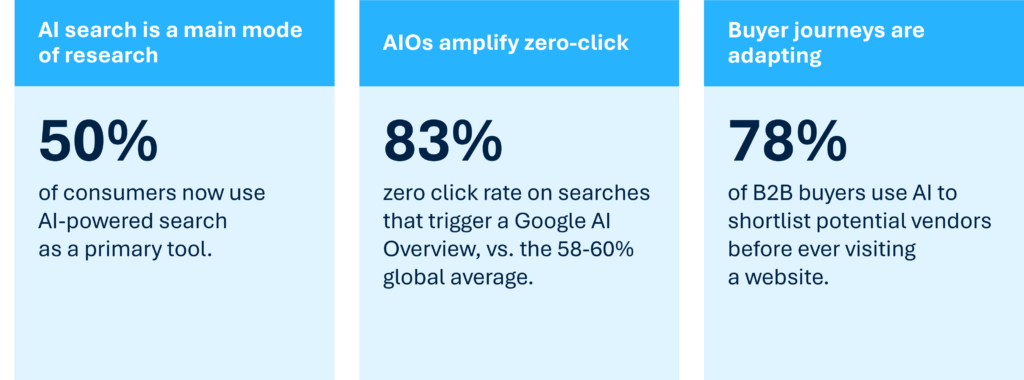
Vendors can no longer rely on buyers to come to their website to discover content and answer questions, particularly in the very critical early stages of purchasing research.
As Megan McCluskey, explains: “There’s this phase now, the buyer journey that marketers can’t see. They’re totally blind to it. Right before a buyer visits the site, reads your content, fills out a form, they’re going to AI, they’re asking it who they should consider, they’re comparing Company A to Company B.”
This invisible research phase represents both a challenge and an opportunity. And now marketers need to optimize their content to show up where people are getting their answers.
Three ways to modernize your content distribution strategy for AI-powered buyers
1. Harness the power of trusted voices
Getting your content seen will only get you in front of buyers. To ultimately get chosen, you need to earn their trust. Building trust in age characterized by skepticism requires a multi-pronged approach. One strategy is to leverage trusted voices – the ones your buyers already go to for answers – to establish credibility and get your message heard.
Enter the three critical voices to build trust with AI-powered buyers:
- The subject matter expert voice – Today’s buyers trust (and crave) proven expertise, whether it’s from a subject matter expert (SME) or real-world research. To gain credibility, brands must contribute value in the form of data-driven, solution-focused content backed by expert perspectives.
- The media voice – In every industry and category, there are communities of interest where important conversations happen. Media brands have teams of journalists covering challenges, insights and trends in the markets and vertical industries. By delivering an independent perspective, they’ve already captured attention and built trust with your buyers that you can inherit through strategic partnership.
- The analyst voice – Buyers are more likely to trust what others are saying about the market and your solutions, especially when it comes from a given industry’s most revered experts. Content from analyst expert voices holds significant weight with buyers because of the years of experience, knowledge and reputation top-tier analysts possess.
Sharing your message through a chorus of trusted voices also helps scale your reach and engagement with buyers. “… part of really programmatic demand gen is about doing that at scale and effectively gaining access to countless sites that have very targeted audiences in their own kind of little walled gardens,” says David Fortino. “And that allows you to have that scale, that depth and breadth …”
2. Show up in the right ecosystems (for every member of the buying team)
As weak AI-generated content and misinformation becomes increasingly rampant, buyers have grown more skeptical and more selective of where they source their information from to guide purchasing decisions. Turning to sources — both sites and subject matter experts — they already trust is a no-brainer in this environment.
McCoskey emphasizes the importance of niche, specific communities: “Trusted places that have credibility are places that exist independently of you as a marketer or vendor,” says McCoskey. “… [if] somebody, a security architect let’s say, is asking, ‘Is this brand credible?’ They’re going to be thinking, ‘Does this brand operate in my world? Do they use the language that I use?’”
And because we know buying teams include a diverse range of roles from finance to practitioners, vendors need to show up in the places each buying team member trusts. We call this “flooding the zone” – a strategy where your brand appears in the key places where the buying group is researching, so you can engage them early and nurture them throughout their journey.
“ … buyers are everywhere. That will never change. Now … they’re just spending time through LLMs and then finding their way to countless media properties, countless watering holes, countless product review sites and so on.” says Fortino. “… you need a scalable model to get you to as many places as possible as cost effectively as possible.”
3. Prioritize AI-resilient channels
We’re not yet at a place where LLM opinions will solely drive decision making. But as they become the ‘front door’ exposure for many brands, marketers need to acknowledge how this synthetic trust – how LLMs identify and evaluate content to source information – will start to influence human decision making over time.
“Now when we think about the synthetic trust that we’re inferring with AI tools, it’s also an input, so it’s about your brand’s credibility. AI is asking, ‘Has this brand said things worth repeating? Are credible sources referencing them?’” says McCoskey. “And if the answer is no, let’s say your content is mostly promotional or you’re optimized for pure SEO and clicks and not those real answers and unique perspectives, it’s going to be harder to show up.”
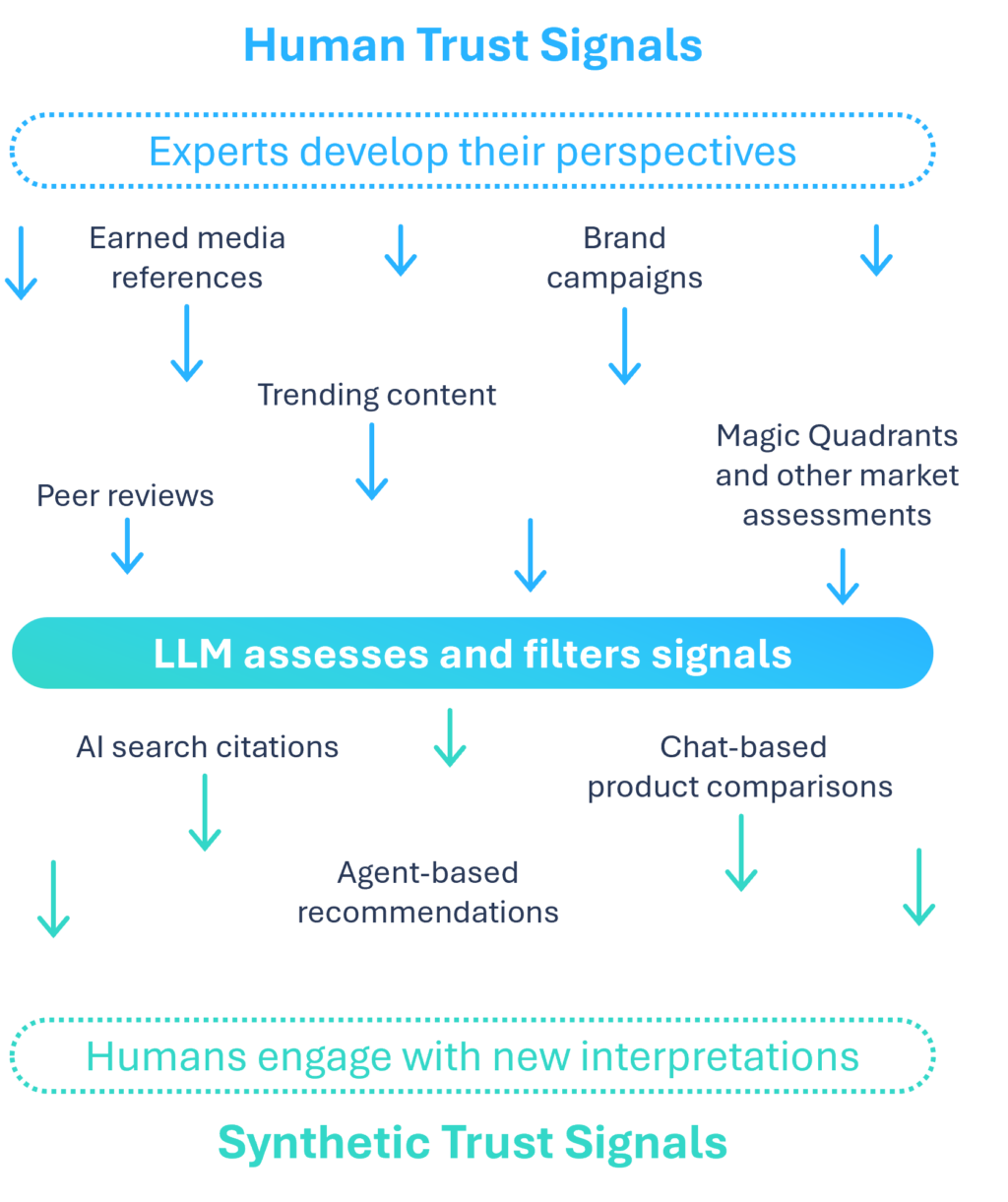
When considering how to get your content to reach your audience, you want to leverage AI-resilient channels that also influence LLMs. These are channels that continue to thrive in the AI-era because buyers trust them and go to them for information. And in turn, LLMs take note and use the same channels to scrape for synthetic trust signals.
The zero-click era isn’t a crisis – it’s a clarifying moment. As buyers increasingly rely on AI and corroboration with their trusted sources to shortlist vendors before ever visiting a website, demand gen marketers must rethink how they’re getting their content in front of buyers.
Informa TechTarget helps B2B organizations craft and amplify high-quality content experiences through trusted voices that drive early buyer preference. Learn more about Unified Demand.
Sources:
-
McKinsey, New front door to the internet: Winning in the age of AI search
-
Similarweb, Zero-Click Searches And How They Impact Traffic
-
Gartner
About the Author