Key takeaways:
Informa TechTarget surveyed 499 global B2B technology buyers for its B2B Content Engagement & Buyer Behavior Report.
- AI drives clicks more than trust: 58% of buyers often click through when AI cites a vendor, but only 42% trust the vendor because of it.
- Credibility sets content apart: 72% believe half or more of what they read is AI-generated, and reliable expertise (60%) tops what they look for in a source.
- Buying teams are expanding: 6 in 10 have changed shape in the past two years, with more business (31%) and technical (28%) stakeholders.
- Newsletters lead discovery: 46% first discover new vendors through newsletters, the No. 1 channel in the study.
Every year, we ask the people who buy B2B technology to walk us through how they research and choose it: where do they look? Who do they listen to? And critically, what slows them down?
For years, that study was called Media Consumption. We’ve renamed it the B2B Content Engagement & Buyer Behavior Study, because media habits stopped being the whole story. How buyers find content has changed, and so has how they decide: AI now sits inside almost every research path, and more people weigh in on every purchase.
The new report draws on 499 B2B technology buyers across company sizes and seniority levels. It opens by boiling the data down to four shifts, each one marking a place where buyers have evolved while most marketing plans haven’t.
Here’s what each shift looks like in the data. For the full picture, unlock the insights-packed report.
1. AI gets you noticed, but it doesn’t get you trusted
44% of buyers use AI tools during active research and evaluation, which makes AI their No. 3 source at that stage. And 64% call AI very or extremely valuable for high-level information gathering.
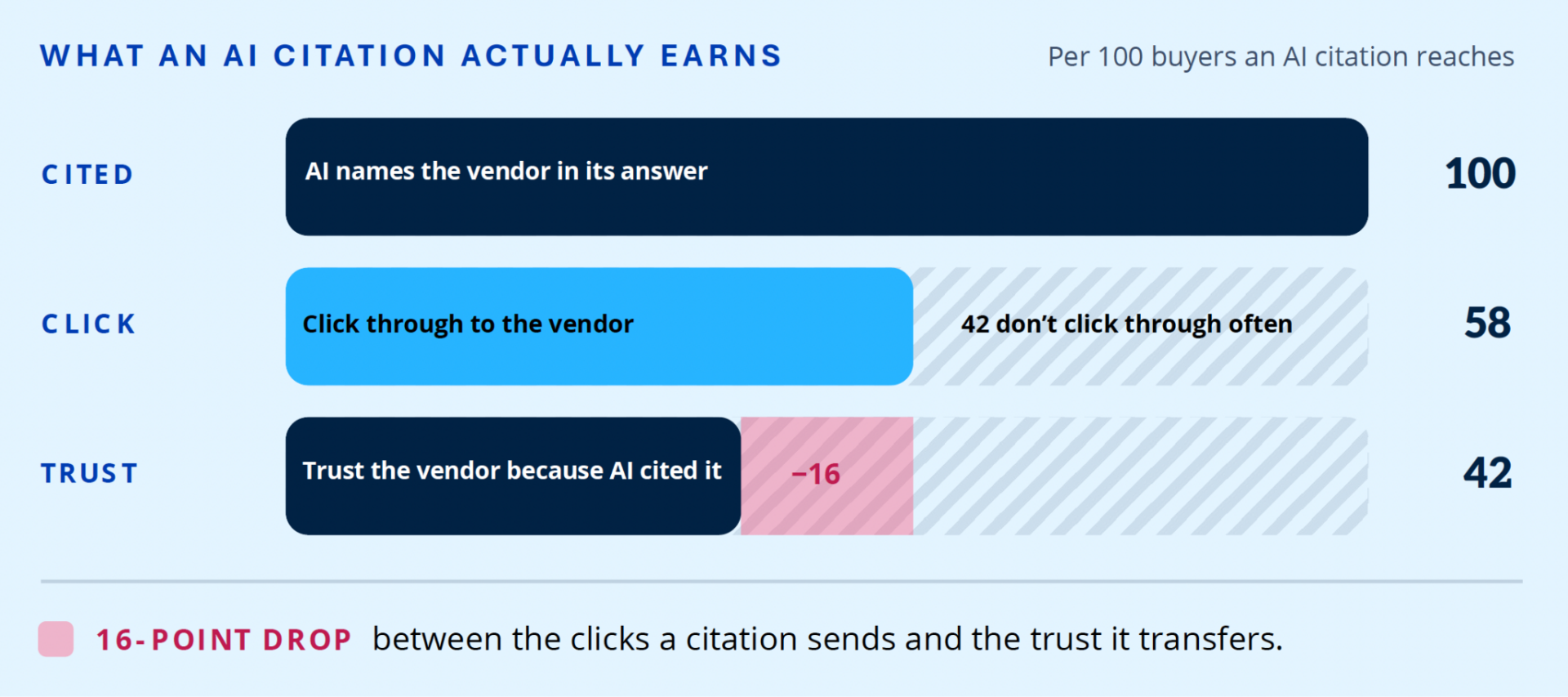
It can also send significant traffic your way. When AI names a vendor, 58% of buyers often or very often click through to that vendor’s site. But only 42% say they trust a vendor because AI cited it, so belief still sits with human-vetted sources at both ends of the journey: third-party research frames the category early on and, come decision time, buyers go back to the sources they already trust.
The bigger the purchase, the stronger that pull: for investments over $1M, 30% of buyers don’t use AI to guide the decision.
Structure, metadata, and parseability help models find and cite your content, but they can’t create the authority behind it. And the sources that put vendors on a buyer’s radar — like analyst coverage, independent media, and newsletters — are many of the same ones AI draws on.
Bottom line: Build credibility strong enough for buyers and AI models will find it, too.
The full report follows what happens after the click, including how many buyers already let AI decide which vendors make their shortlist.
2. Competent content is now the baseline
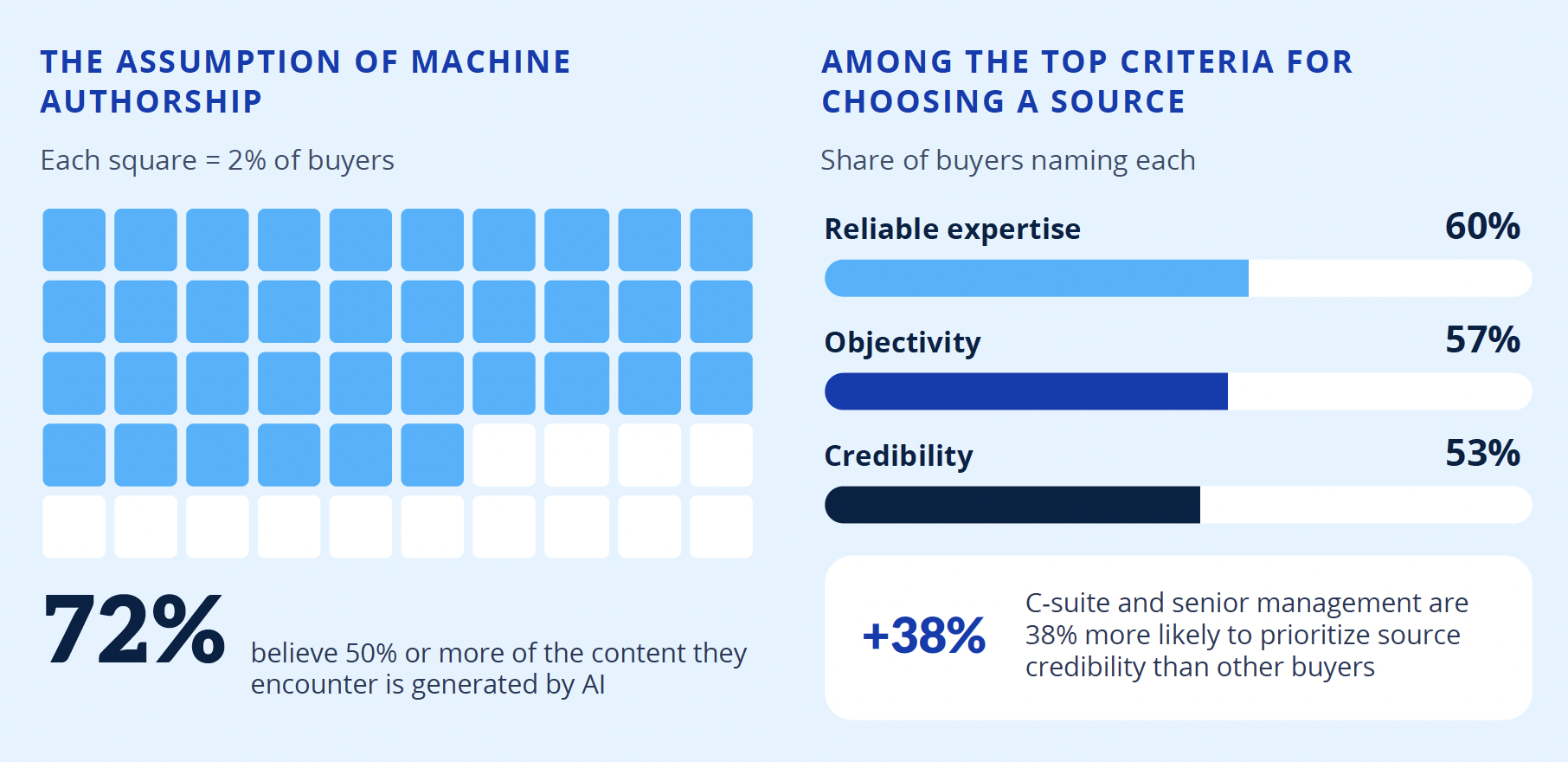
72% of buyers believe half or more of the content they encounter is AI-generated. And when readers expect machine authorship, polished but generic content just confirms the suspicion.
As AI becomes a given, what buyers look for instead is:
- reliable expertise (60%)
- objectivity (57%)
- relevance to their pain points (55%)
- and credibility (53%).
And the bar rises with seniority: the people who sign the contracts are the hardest to convince.
C-suite and senior management are 38% more likely than other buyers to prioritize source credibility.
That said, vendor content still matters. Vendor websites rank in the top five media types in both early- and late-stage evaluation, but 61% of buyers say high-quality vendor content is hard to find. The gap is in quality, not volume, and the report breaks down which formats buyers lean on before the shortlist and which ones close the decision.
Bottom line: Original data, named experts, and a strong POV are what build credibility today.
Also in the report: the one trait that outranks writing and design quality nine to one, and how few buyers rate vendor content as excellent.
Make content worth citing. Global Content Studio helps you build content with the expertise and original insight buyers screen for. Explore the Global Content Studio
3. The lead converts, but the committee still says no
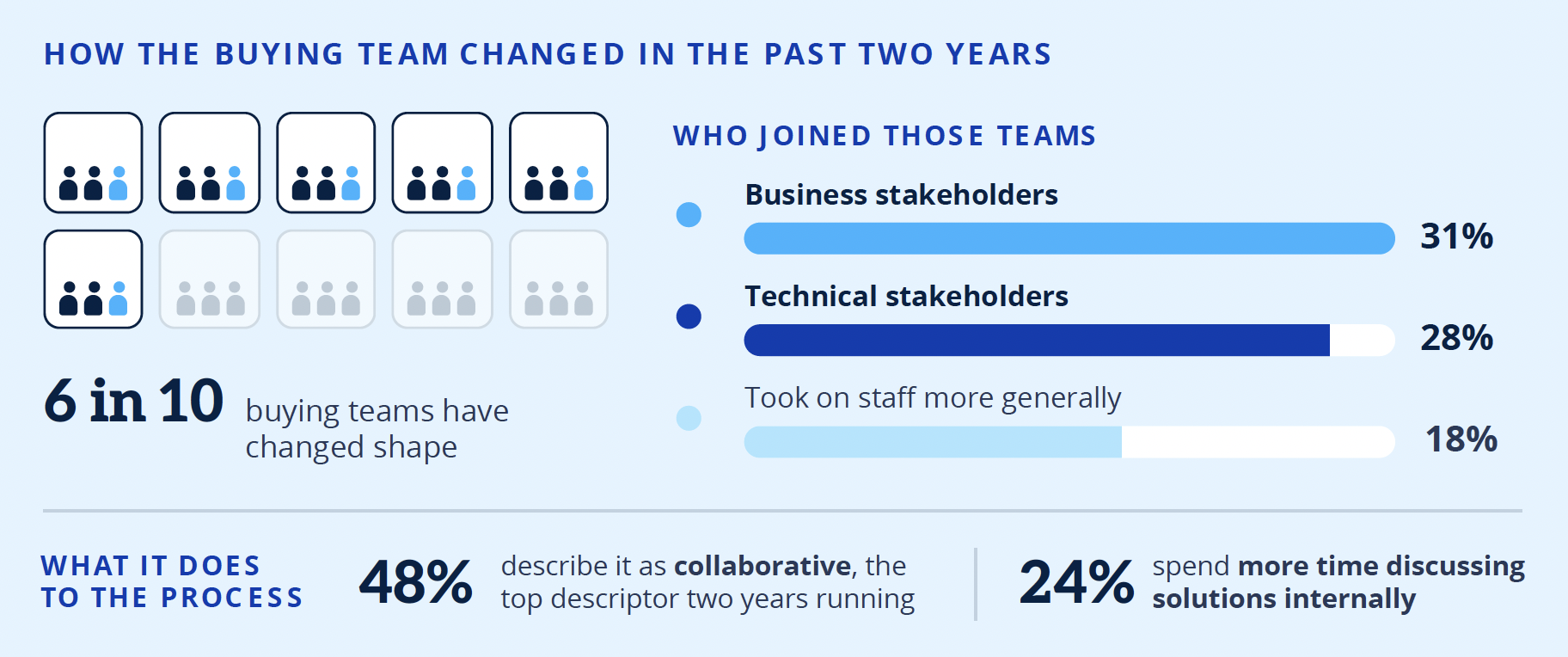
Six in 10 buying teams have changed shape over the last couple of years, most often by adding business (31%) and technical stakeholders (28%). And they’re deciding together. Nearly half of buyers (48%) call their purchase process collaborative, and 24% say internal discussion now takes up more of their time than it used to.
Most demand gen programs were built for a different setup. Lead scoring, single-threaded nurture, and stage-based attribution all follow one person’s journey (whoever filled out the form). But that person is researching alongside colleagues who bring their own questions and take their own paths to the same decision. That means one lead might convert while the rest of the group doesn’t.
That’s where deals often stall. Buyers name ROI uncertainty (30%), lack of in-house expertise (29%), and buy-in from business decision-makers (27%) among the top reasons. And each usually points to someone in the buying group your program hasn’t reached.
“A deal marked ‘stalled, no clear reason’ often comes down to a committee member your funnel never reached.”
Tara Faulkner, VP of Campaigns & Demand Generation, Informa TechTarget
Bottom Line: Measure the buying group instead of the lead:
Track which roles have joined the conversation and build parallel paths for business and technical stakeholders who need different evidence to say yes. The full report maps every major cause of stalled deals, as well as the content that can answer each one before it turns into an objection.
Reach the whole buying group by knowing exactly who’s in-market, and why. Explore Buyer Intelligence.
4. Budgets follow attribution, buyers follow newsletters
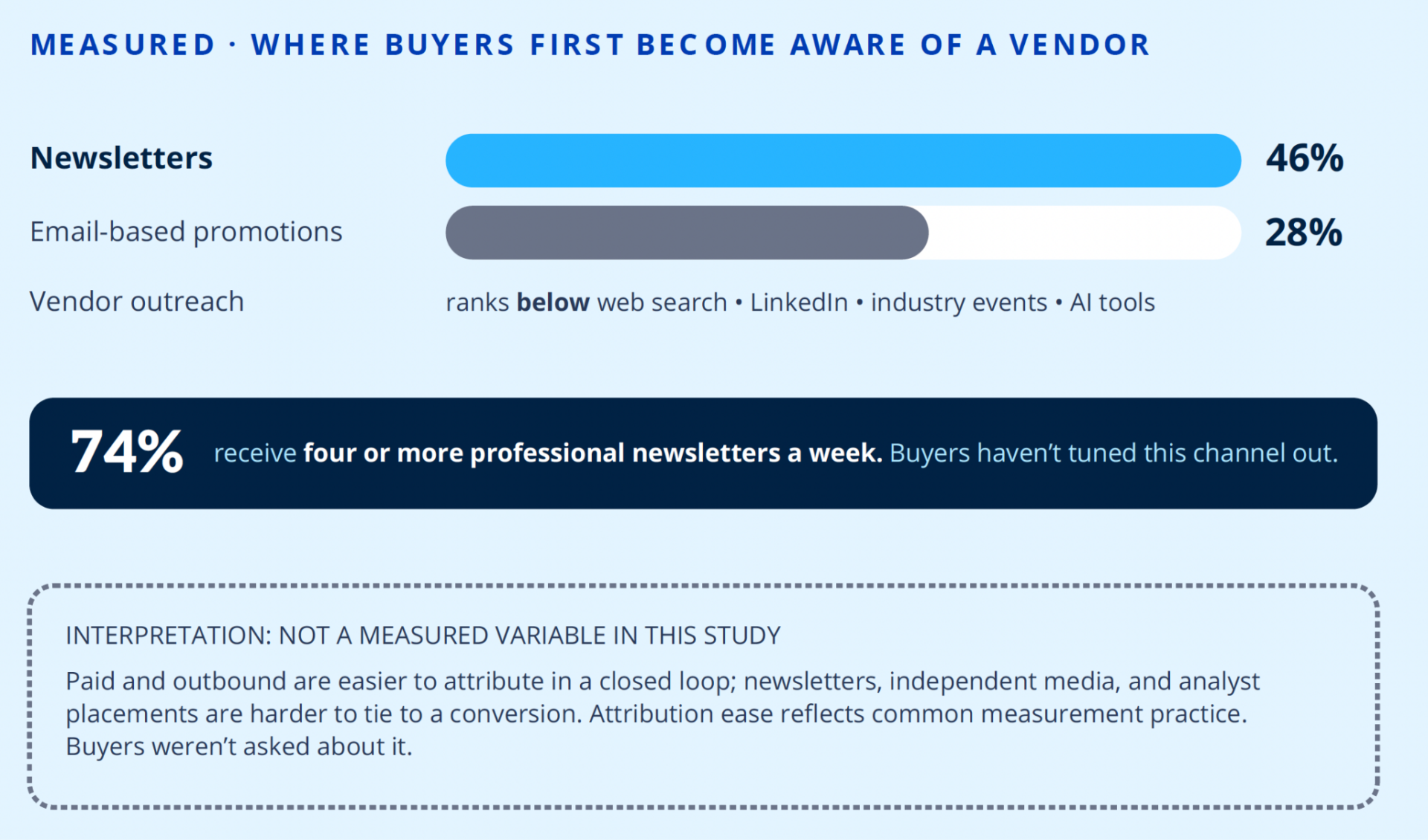
Ask B2B buyers where a new vendor first crossed their radar, and newsletters come out on top at 46%. Email-based promotions trail at 28%, and vendor emails and calls rank behind web search, LinkedIn, industry events, and even AI tools. Digital advertising, meanwhile, sits near the bottom of early-stage media use at around 10%. But buyers are still reading, and they haven’t tuned out newsletters.
34% of buyers get ten or more professional newsletters a week.
So why doesn’t the budget reflect that? For most teams, it comes down to attribution. A paid click or an outbound reply lands neatly in the dashboard, whereas a newsletter mention, an independent article, or an analyst placement rarely traces back to one conversion. Instead, it ends up in the brand column — even when it’s the reason the buyer showed up. Give discovery a line in the demand budget, and measure it by what it moves, like shortlist inclusion and buying-group coverage.
Bottom line: Paid and outbound still earn their keep closer to decision time.
The risk is funding only what you can trace and starving what got you on the shortlist in the first place. One twist in the data: among enterprise buyers, a different channel overtakes newsletters for first discovery.
The full report goes channel by channel and stage by stage, with separate deep dives for content marketers and demand gen leaders.
Download the B2B Content Engagement & Buyer Behavior Report to see the whole picture.
Building a plan that reaches the whole buying group, from first discovery to final decision, takes brand and demand working together.
Discover how Unifying Demand brings them into one strategy, or talk to an expert.
About the Author